
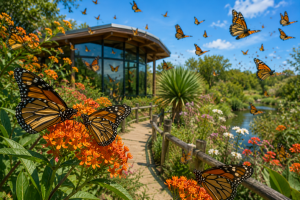
USA Today has called Mission, Texas the “butterfly capital of the USA,” and the National Butterfly Center is exactly why. Peak migration season doesn’t fully arrive until later in fall, but the weeks leading up to it are genuinely worth a visit in their own right — and this preview covers what you can expect to see now, what’s coming as the season builds, and how to plan around the 30th Annual Texas Butterfly Festival this November.
Why the Rio Grande Valley Is Genuinely Unique for Butterflies
Nearly 150 species of North American butterflies can be seen only in the Lower Rio Grande Valley or by traveling into Mexico — a genuinely remarkable statistic that explains why serious butterfly enthusiasts travel from across the country and internationally specifically to visit this corner of Texas. The Valley’s subtropical climate, its position at the meeting point of temperate and tropical species ranges, and its proximity to Mexico all combine to create a butterfly diversity that simply doesn’t exist elsewhere in the United States.
What’s Building Toward Peak Season Right Now
Peak butterfly season at the National Butterfly Center occurs in late fall, driven significantly by September rainfall patterns that trigger a wave of blooming and breeding activity across the Valley. Monarch butterflies specifically begin entering Texas in early September, following a migration route that runs generally along the I-35 corridor from around Wichita Falls down toward Eagle Pass, with the broader migration continuing to build and move through the region as fall progresses toward the Center’s peak viewing weeks.
Visiting in the weeks before full peak gives you a genuinely different, quieter experience of the Center than the festival crowd will see in November — smaller numbers of visitors, and the chance to watch the season’s buildup happening in real time, from early migrants and resident species through to the fuller wave that arrives closer to the festival itself.
“People think of the festival weekend as the only time worth coming, and honestly, the weeks leading up to it are some of my favorite times to walk the trails. You’re seeing queens and other resident species doing their thing on the milkweed and mistflower, the early monarchs are starting to show up, and you don’t have to share the trail with a crowd. It’s a genuinely different, quieter kind of visit.”
What You’ll See Now vs. What’s Still Coming
Resident Species and Early Arrivals
Ahead of full migration, the Center’s gardens are already active with resident species — queens (a close relative of the monarch) are commonly seen clustering on milkweed and mistflower blooms in significant numbers, alongside numerous other resident butterfly species that call the Valley home year-round rather than migrating through. These resident populations give visitors plenty to see even before the migratory wave builds.
The Monarch Wave Still Building
The most dramatic single-species spectacle — large numbers of monarchs moving through on their way to Mexican overwintering sites — builds progressively from early September through the Center’s peak late-fall weeks. Visiting now means catching the buildup and the resident species in full swing; visiting during the festival specifically maximizes your chances of the fuller migratory wave, though the exact timing and volume varies somewhat year to year based on weather patterns along the migration route.
Practical Visit Information
The National Butterfly Center’s grounds are open all week, generally from 8 a.m. to 5 p.m. Admission runs $10 for adults and $5 for children ages 5 to 12, with children under 5 admitted free; a weekly pass is available for $35, and local residents of Hidalgo, Cameron, Willacy, and Starr Counties receive discounted admission. The Center offers guided walks, a native plant sale, and various educational programming throughout the season, giving visitors options beyond simply walking the trails independently.
Timing Your Visit for the Day
Butterflies are most active in warmer conditions, generally preferring temperatures above 70 degrees, so checking the day’s forecast before planning your specific visit time helps ensure you catch peak activity rather than a cooler stretch when butterflies are less active and visible. A mid-morning to early afternoon visit, once temperatures have warmed but before the most intense heat of a South Texas afternoon, is typically the sweet spot for both butterfly activity and visitor comfort.
The 30th Annual Texas Butterfly Festival
The National Butterfly Center hosts the 30th Annual Texas Butterfly Festival November 7 through 10, 2026 — a milestone anniversary for what’s become the country’s premier butterfly event, drawing attendees from roughly half of U.S. states and multiple countries. The festival features guided field trips and educational programming for all experience levels, from complete beginners to serious lepidopterists, along with the North American Butterfly Photo Contest and other programming spread across the multi-day event. Registered attendees spending the full multi-day festival exploring both the Center’s grounds and nearby public and private properties with expert trip leaders can reasonably expect to see 60 or more species across the event.
Free Community Day
Saturday, November 7, 2026, from 9 a.m. to 2 p.m. is Community Day — free and open to the public, giving visitors who aren’t registering for the full multi-day festival experience a genuine, no-cost opportunity to experience the festival atmosphere, see the grounds during peak season, and take part in family-friendly programming without the cost of full festival registration.
Pairing a Butterfly Visit With the Rest of Your Rio Grande Valley Trip
The Valley’s butterfly abundance is closely tied to its native plant and wildflower diversity, and understanding the broader seasonal bloom patterns across the region adds context to what you’re seeing at the Center specifically. The seasonal flower blooms to see in the Rio Grande Valley guide covers what’s blooming across different times of year in the broader Valley, which directly connects to why certain butterfly species show up when they do.
Location: south Mission, TX, along the Rio Grande. Pilot project of the North American Butterfly Association (NABA).
Species diversity: 300+ species documented in the LRGV, 240+ recorded at the Center specifically, ~150 species found only in the LRGV or Mexico.
Peak season: late fall, driven by September rainfall patterns. Monarchs enter Texas in early September along the I-35 corridor.
Hours/admission: open daily ~8am-5pm. $10 adults, $5 kids 5-12, free under 5. Weekly pass $35. Local county residents get a discount.
Best visit timing: temperatures above 70°F for peak butterfly activity — mid-morning to early afternoon is typically the sweet spot.
2026 Texas Butterfly Festival: 30th Annual, November 7-10, 2026. Free Community Day: Saturday, Nov 7, 9am-2pm.
Right now (before peak): resident species (queens on milkweed/mistflower) plus early monarch arrivals — a quieter, still-genuinely-rewarding visit.
For visitors planning a fall Rio Grande Valley trip around the butterfly season, the about Mission RV Resort page gives the fuller picture of the resort and the community it’s part of, and the Mission RV Resort photo gallery gives a sense of the property itself. And for booking a fall stay timed around a National Butterfly Center visit or the festival, Mission RV Resort is the starting point.
Frequently Asked Questions
When is peak butterfly migration season at the National Butterfly Center?
Peak butterfly season at the National Butterfly Center occurs in late fall, driven significantly by September rainfall patterns that trigger blooming and breeding activity across the Rio Grande Valley. Monarch butterflies specifically begin entering Texas in early September along a migration route running generally down the I-35 corridor, with the broader migration building through fall toward the Center’s peak viewing weeks around the Texas Butterfly Festival in early November.
When is the 2026 Texas Butterfly Festival?
The 30th Annual Texas Butterfly Festival takes place November 7 through 10, 2026, at the National Butterfly Center in Mission, Texas. The festival features guided field trips, educational programming for all experience levels, the North American Butterfly Photo Contest, and other activities spread across the multi-day event. A free Community Day is held on Saturday, November 7, 2026, from 9 a.m. to 2 p.m., open to the public without festival registration.
Is it worth visiting the National Butterfly Center before peak season?
Yes. Visiting in the weeks before full peak migration offers a quieter, less crowded experience while still providing plenty to see, including resident species like queens (a close relative of the monarch) clustering on milkweed and mistflower blooms, along with numerous other year-round resident butterflies. Early monarch arrivals also begin appearing as the migration builds through September, giving early-season visitors a genuine preview of the fuller wave that arrives closer to the festival dates.
How much does it cost to visit the National Butterfly Center?
General admission is $10 for adults and $5 for children ages 5 to 12, with children under 5 admitted free. A weekly pass is available for $35 for visitors planning multiple visits during a longer stay. Local residents of Hidalgo, Cameron, Willacy, and Starr Counties are eligible for discounted admission. The grounds are open daily, generally from 8 a.m. to 5 p.m.
What time of day is best to see butterflies at the Center?
Butterflies are most active in temperatures above 70 degrees, so checking the day’s forecast before planning your visit helps ensure good activity levels. A mid-morning to early afternoon visit, once the day has warmed but before the most intense heat of a South Texas afternoon, is typically the best window for both butterfly activity and visitor comfort during a fall visit.
How many butterfly species can be seen in the Rio Grande Valley?
More than 300 species of butterflies have been documented in the Lower Rio Grande Valley, with over 240 of those species recorded specifically at the National Butterfly Center. Nearly 150 species can be seen only in the Lower Rio Grande Valley or by traveling into Mexico, making the region one of the most significant butterfly-watching destinations in North America and a major reason serious enthusiasts travel from across the country and internationally to visit.