Brownsville doesn’t always make the top of the Rio Grande Valley day trip list. It probably should. The drive is an hour from Mission. The zoo alone is worth a full morning. And the city has more going on than most Valley visitors realize.
This guide covers the full Brownsville day trip, with the zoo as the centerpiece and the surrounding city as the supporting context that makes a longer day worthwhile.
Gladys Porter Zoo: What Makes It Worth the Drive
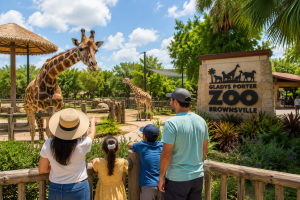
The Gladys Porter Zoo in Brownsville is routinely ranked among the top small zoos in the United States, and not without reason. Founded in 1971 through a gift from Tom Slick and Gladys Porter, the zoo sits on 26 acres along a resaca — the oxbow lake that gives Brownsville its distinctive water-laced landscape — and uses natural moat barriers rather than cages for many of its exhibits, giving the experience an open, immersive quality that larger zoos with traditional enclosures often lack.
The zoo’s collection focuses on four geographic areas: Africa, Indo-Australia, Tropical America, and Holarctic, with animal exhibits representing endangered and threatened species from each region. The emphasis on conservation programs and breeding programs for critically endangered species gives the zoo a mission-driven character beyond simple display.
The Animals: What to Prioritize
The Gladys Porter Zoo is particularly known for its work with critically endangered species, several of which are represented in the collection. The Sumatran rhinoceros program at Gladys Porter was historically significant in zoo conservation circles — while the rhinos are no longer there, the zoo continues to distinguish itself in its breeding programs for various threatened species. Current collection highlights change with new arrivals and breeding success; checking the zoo’s website before visiting gives you the most current information on what’s featured.
For families with young children, the African section with its okapi, zebra, and giraffe viewing areas typically produces the highest engagement. The ape enclosures with gorillas and orangutans are consistently popular. The reptile building is worth more time than most visitors allocate — the collection of rare and endangered reptile species is one of the stronger in the Southwest and appeals to the age group that finds reptiles more interesting than most adults do.
Practical Zoo Logistics
The zoo is open daily with varying seasonal hours — typically 9 a.m. to 5 p.m. with last entry at 4 p.m. Confirming current hours and admission prices at gladysporterzoo.org before your visit is advisable, as both change periodically. Admission is modest for a zoo of this quality — typically $10 to $15 for adults and $7 to $10 for children, though prices have adjusted in recent years and current rates should be verified.
The resaca that borders the zoo provides natural birding along the perimeter path — the Valley’s exceptional bird diversity extends to the zoo’s natural water features, and a pair of binoculars in addition to the zoo visit is worth the extra weight for bird-oriented visitors. Great kiskadee, green kingfisher, and various heron species are regular sightings.
“The Gladys Porter Zoo is what a zoo looks like when the designers thought about animals first and visitors second. The moat barriers and open sightlines change the experience in ways that matter.”
Beyond the Zoo: Brownsville Day Trip Context
A full Brownsville family day trip doesn’t have to stop at the zoo, and the surrounding city has enough substance to extend the visit comfortably if you arrive with energy to explore.
Historic Downtown Brownsville
Brownsville’s historic downtown along Elizabeth Street and the adjacent blocks preserves a concentrated collection of late 19th and early 20th century commercial architecture that reflects the city’s period as a significant Rio Grande trade and cultural center. The downtown has experienced cycles of development and decline, and parts of it remain in transition — but the core historic streetscape and the Brownsville Historical Museum give the area more substance than a typical mid-sized Texas city downtown provides.
The Stillman House Museum, the city’s oldest surviving residence (built 1850), is a specific stop worth making if the cultural history of the Rio Grande border period interests you. The Battle of Palo Alto National Historic Park, just north of the city, preserves the site of the first major engagement of the Mexican-American War in 1846 — a significant historical site that’s under-visited given its national significance.
The Resacas: Brownsville’s Natural Feature
The resacas — the oxbow lakes and former channels of the Rio Grande that lace through Brownsville’s urban landscape — are one of the city’s most distinctive natural features and worth understanding as you move through the city. Several resaca parks provide shoreline access and birding opportunities. The Sabal Palm Sanctuary south of the city, accessible as a short detour, preserves one of the last remaining stands of sabal palm forest in the United States — a genuinely rare and significant natural area that most Valley visitors have never seen.
Eating in Brownsville
The things to do in Brownsville picture includes food that reflects the city’s bilingual border character more authentically than most Valley cities closer to the major commercial corridors. Authentic regional Mexican cooking — not Tex-Mex but actual Tamaulipas and Nuevo León regional cuisine — is available in Brownsville restaurants that don’t cater primarily to tourist populations. Cabrito, birria, and regional soups are worth seeking out specifically here rather than defaulting to the familiar Tex-Mex menu that dominates the McAllen-Mission commercial dining scene.
The Drive from Mission: Route and Timing
From Mission, Brownsville is approximately 60 to 70 miles east via US-83 east (the fastest route) or US-281 east (the more scenic route through Santa Cruz and Rio Hondo along the Rio Grande). Drive time is 1 to 1.5 hours depending on route and traffic. Leaving Mission by 8 a.m. puts you at the zoo when it opens at 9, giving you the full morning before heat and crowds build. A 9 a.m. arrival, three to four hours at the zoo, lunch in downtown Brownsville, and an afternoon at one or two additional sites makes a complete day without feeling rushed.
Gladys Porter Zoo: 500 E. Ringgold St, Brownsville. Open daily, typically 9 a.m.–5 p.m. (last entry 4 p.m.). Verify current hours and admission at gladysporterzoo.org. Bring hats and sunscreen — significant outdoor walking in South Texas sun. Pack water; the zoo has concessions but the lines build midday. Arrive early for the best animal activity and before midday heat peaks. Binoculars for the resaca birding perimeter. Allow 3–4 hours minimum for a proper zoo visit.
For winter Texans and seasonal RV residents based in the Mission area, the Valley’s full range of day trip options — from Brownsville east to South Padre north and Nuevo Progreso south — is part of what makes an extended winter stay here genuinely rewarding rather than repetitive. The RVing and Valley lifestyle guide at Mission RV Resort covers the practical dimensions of making the most of a winter stay, and the Valley community and lifestyle overview gives the broader context of what life in the RGV looks like across the full season. For alternative RV park options in the Mission corridor, Citrus City RV Park is another option in the area worth knowing. And for everything about the resort and planning your stay, Mission RV Resort is the starting point.
Frequently Asked Questions
How far is Gladys Porter Zoo from McAllen and Mission?
Gladys Porter Zoo in Brownsville is approximately 60 to 70 miles east of McAllen and Mission, with a typical drive time of 1 to 1.5 hours via US-83 or US-281. The most direct route is US-83 east from Mission through Edinburg, Weslaco, and Harlingen to Brownsville, then south to the zoo on East Ringgold Street. The US-281 route along the Rio Grande through Santa Cruz and Rio Hondo is longer but more scenic and follows the river corridor through some of the Valley’s most distinctive agricultural landscape.
How much does Gladys Porter Zoo cost?
Gladys Porter Zoo admission is typically $10 to $15 for adults and $7 to $10 for children, though prices have been adjusted in recent years and the current rates should be verified at gladysporterzoo.org before visiting. The zoo is consistently considered strong value for the quality of the collection and the experience it provides — the admission price is modest relative to larger metropolitan zoos with comparable collections. The zoo is located at 500 East Ringgold Street in Brownsville and is open daily.
How long does it take to see the Gladys Porter Zoo?
A thorough visit — covering all four geographic sections, the reptile building, and the resaca perimeter path — typically takes 3 to 4 hours for most families. Visitors with young children who move more slowly through exhibits may find 4 hours or more appropriate. Visitors doing a faster walkthrough can see the highlights in 2 hours. Arriving at opening (9 a.m.) is recommended for the best animal activity (many animals are most active in the morning), manageable temperatures in summer, and lighter crowds before midday arrival peaks on weekends.
Is Gladys Porter Zoo good for toddlers and young children?
Yes, well-suited for children of most ages. The zoo’s open moat-barrier design gives young children better sightlines to animals than traditional cage or fence enclosures. The African section with zebra, giraffe, and large mammals consistently engages younger children. The relatively compact 26-acre footprint means a full visit doesn’t require extremely long walks between exhibits — manageable for families with strollers and young children. Concession stands and shaded rest areas are distributed throughout. In summer heat, plan for the visit to be complete by midday and bring water; toddlers in particular need extra hydration monitoring in South Texas summer temperatures.
What else is there to do in Brownsville for a family day trip?
Beyond Gladys Porter Zoo, Brownsville’s family day trip attractions include the Battle of Palo Alto National Historic Park (site of the first major engagement of the Mexican-American War in 1846, managed by the National Park Service with free admission), the historic downtown Elizabeth Street area, the Stillman House Museum, the resaca parks for birding and shoreline walking, and the Sabal Palm Sanctuary south of the city (one of the last remaining stands of native sabal palm forest in the United States). For families interested in the Rio Grande border history and the city’s bilingual culture, the downtown area and the riverside sections of the city provide a genuinely substantive cultural experience beyond the zoo.
What are the resacas in Brownsville and why are they significant?
Resacas are oxbow lakes formed by former channels of the Rio Grande — meandering water features that lace through Brownsville’s urban landscape and give the city a distinctive appearance unlike any other Texas border city. The resacas provide habitat for a wide range of bird species, support the Valley’s exceptional migratory bird corridor, and give Brownsville’s landscape a subtropical water-garden quality. The Gladys Porter Zoo is positioned along a resaca, contributing to both its visual appeal and the informal birding that enhances a zoo visit. Several resaca parks in Brownsville provide public access to these natural water features for birding, fishing, and walking.