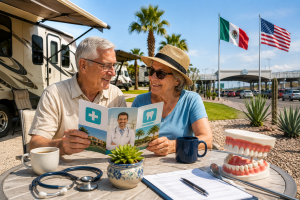
Healthcare planning is the part of a winter season that most snowbirds think about briefly and then hope for the best. This guide does the thinking for you — what the Valley has to offer, how your coverage works out of state, and the cross-border options that experienced winter Texans have been using for decades.
The Rio Grande Valley Medical Infrastructure: What’s Available
The Mission-McAllen corridor is not a medical backwater. The area has developed a full regional medical system that serves both the permanent Valley population and the substantial snowbird community that has been wintering here for generations. Understanding the system before you need it prevents the scramble of figuring it out under pressure.
McAllen is the primary medical hub of the Valley, with two major hospital systems: DHR Health (Doctors Hospital at Renaissance) and the South Texas Health System, both operating multiple facilities including the main hospitals and specialized care centers. DHR Health has developed into one of the more comprehensive medical centers in South Texas, with specialty services including cardiac care, cancer treatment, and orthopedics that many rural or smaller city hospital systems don’t offer.
Mission itself has medical facilities including urgent care centers and primary care practices that handle routine care without requiring a drive to McAllen. The Texas Department of Health Services maintains an updated list of licensed healthcare facilities by county — Hidalgo County, which covers Mission and McAllen, has one of the more developed healthcare landscapes in South Texas.
Urgent Care vs. Emergency Room
Knowing this distinction before you need it saves both money and time. Urgent care centers handle the range of non-life-threatening conditions that require same-day attention — respiratory infections, urinary tract infections, minor injuries, prescription renewals that can’t wait for a primary care appointment. Emergency rooms handle genuine emergencies. Using an ER for urgent care conditions produces a significantly higher bill and often a longer wait than using an urgent care center for the same condition. Several urgent care chains operate in the McAllen-Mission corridor; saving the address and phone number of the nearest one in your phone before anything goes wrong is basic preparation.
“The Valley has better healthcare than most snowbirds expect. The question is knowing what’s where before you need it rather than Googling while you’re already sick.”
Medicare and Out-of-State Coverage: How It Actually Works
Snowbird healthcare coverage in Texas works differently than many snowbirds assume, and getting clear on the rules before leaving home prevents unpleasant billing surprises. The key coverage questions depend on whether you have Original Medicare or a Medicare Advantage plan.
Original Medicare (Parts A and B)
Original Medicare works everywhere in the United States. If you’re in the Mission area and need to see a doctor or go to the emergency room, any provider who accepts Medicare will be covered under Original Medicare regardless of which state you’re in. The billing flows through the same system; there’s no out-of-network issue with Original Medicare because the system doesn’t have networks in the traditional sense. This is one of the significant advantages of Original Medicare over Medicare Advantage for snowbirds who spend substantial time out of their home state.
Medicare Advantage Plans
Medicare Advantage plans (Part C) are a different situation. These are managed care plans operated by private insurers that contract with Medicare, and they typically have provider networks. Coverage outside your plan’s network is often limited to emergency care only — routine and non-emergency care from out-of-network providers may not be covered or may be covered at significantly lower rates. For snowbirds spending four or more months in the Valley on a Medicare Advantage plan, the network situation deserves specific attention before the trip.
The practical options: confirm whether your plan covers the Valley’s providers as in-network (some plans have broader networks that include Texas providers); investigate whether your plan has a travel benefit that extends network coverage for extended out-of-area stays; or consider whether switching to Original Medicare with a Medigap supplement during the annual Medicare enrollment period (October 15 to December 7) makes sense for your situation given the extended out-of-state stay. Medicare enrollment decisions have a timeline, and the enrollment window doesn’t wait for you to figure this out.
Winter Texan Dental: The Cross-Border Advantage
The cross-border dental in Mexico topic is one of the most reliably practical pieces of information a new winter Texan can receive, because the experienced ones have been using it for decades and the savings are genuinely significant. The Mexican border cities directly across from the Rio Grande Valley — specifically Reynosa, Nuevo Progreso, and Matamoros — have developed extensive dental and medical tourism industries that serve the Valley’s winter Texan population.
Dental care in these border cities is performed by licensed Mexican dentists who in many cases have trained in Mexico’s national dental schools (comparable to American dental education in clinical standards), and the cost differential is substantial. A porcelain crown that costs $800 to $1,200 in the United States typically runs $150 to $300 in the border dental clinics. A full set of implants that might cost $3,000 to $5,000 per tooth in the US often runs $800 to $1,500 per implant in the border cities. Cleanings, fillings, dentures, and routine care are similarly discounted.
The Most Common Destination: Nuevo Progreso
Nuevo Progreso, directly across the Rio Grande from Weslaco (about 45 minutes east of Mission), is the most popular cross-border destination for dental care among winter Texans. The city has a pedestrian bridge accessible from the US side, a commercial street with dozens of dental offices, optical shops, and pharmacies catering specifically to American visitors, and an established tourism infrastructure that has operated for decades. Many Nuevo Progreso dental offices have English-speaking staff and accept US credit cards.
The Rio Grande Valley winter Texan community has a well-developed informal knowledge base about specific clinics in Nuevo Progreso — asking at the resort, on Valley winter Texan Facebook groups, or directly at the dental association in the border city surfaces the well-reviewed operations quickly. Word-of-mouth from experienced winter Texans is the most reliable quality filter for border dental care.
What to Bring and What to Know
Crossing to Nuevo Progreso requires a valid US passport or enhanced driver’s license — not a standard state ID. The crossing is pedestrian-accessible; you park on the US side and walk across. The process is straightforward and routine for the Valley’s border crossing infrastructure. Most winter Texans make the trip in the morning, get dental work done, shop, and return in the afternoon.
For significant dental work (implants, major reconstructive work), getting an assessment during the first trip and the work done over subsequent visits is the standard approach. Some winter Texans specifically time their Valley stay to complete a multi-appointment dental treatment plan they couldn’t afford at home.
Pharmacies: Another Border Advantage
Prescription medications are significantly cheaper in Mexican pharmacies, and many common medications are available without a prescription that require one in the US. Winter Texans who manage ongoing prescriptions often purchase a supply in the border pharmacies at a fraction of the US retail cost. The most common use cases are blood pressure medications, statins, diabetes medications, and anti-inflammatory drugs.
The practicalities: bring your prescription information or the medication bottles, as the pharmacist needs to know the specific drug and dosage. Bring more US dollars than you think you’ll need — cash is king in the border pharmacies, though credit cards are increasingly accepted. Carrying medication across the border into the US is legal for personal use in reasonable quantities; traveling with the original prescription or medication documentation is advisable but not technically required for personal use amounts.
Medical care: DHR Health and South Texas Health System in McAllen, urgent care centers in Mission-McAllen corridor. Save the nearest urgent care address before you need it.
Medicare: Original Medicare works everywhere in the US. Medicare Advantage plans — check your network coverage before the season or consider the January 1–March 31 Medicare Advantage OEP (open enrollment period) if you discover a gap.
Cross-border dental: Nuevo Progreso (45 min east of Mission) — porcelain crowns $150–300, implants $800–1,500, full services available. Passport required.
Pharmacies: Significant savings on common prescriptions at border pharmacies.
For winter Texans who want the full picture of life in the Valley — what a season here actually involves, including the practical logistics that experienced residents have figured out — the Valley community and lifestyle overview at Mission RV Resort covers the day-to-day reality of an extended stay. The RVing and Valley activity guide covers the outdoor and recreational picture. Snowbirds approaching from the eastern Valley corridor near La Feria can check the La Feria RV Park page for that area’s options. For any questions about the resort and planning your stay, the Mission RV Resort contact page connects you directly. And for everything about planning a winter season, Mission RV Resort is the starting point.
Frequently Asked Questions
Does Medicare cover healthcare during a winter stay in Texas?
Original Medicare (Parts A and B) covers healthcare anywhere in the United States, so a winter stay in Texas is fully covered by Original Medicare at any provider who accepts Medicare. Medicare Advantage plans (Part C) are different — they have provider networks, and coverage outside the network is often limited to emergency care only. Snowbirds on Medicare Advantage plans should verify their specific plan’s coverage for Texas providers before their stay, or contact their plan to ask about a travel or extended-stay benefit. The Medicare Annual Enrollment Period (October 15 to December 7) is the window for switching between Original Medicare and Medicare Advantage if a change is warranted.
Is it safe to get dental work done in Mexico near the Valley?
Cross-border dental care in the border cities adjacent to the Rio Grande Valley — particularly Nuevo Progreso — has been utilized by winter Texans for decades. Mexican dentists are licensed through Mexico’s national dental education and licensing system; the clinical education is comparable to US dental training, and the border dental clinics that specialize in US clientele have strong incentives to maintain quality given that their business depends entirely on word-of-mouth from a satisfied winter Texan community. The practical filter for quality is asking experienced winter Texans at your resort for recommendations — the community has accumulated years of experience with specific clinics and dentists. Getting a consultation before committing to significant work allows you to assess the clinic’s quality and communication before anything major happens.
What do I need to cross the border to Nuevo Progreso for dental care?
A valid US passport book or passport card is required for re-entry into the United States — an enhanced driver’s license (issued by certain states) is also accepted. A standard state-issued driver’s license is not sufficient for re-entry. The crossing to Nuevo Progreso is via the pedestrian bridge from the Weslaco area — you park on the US side and walk across. The crossing process is routine and straightforward; the bridge is specifically designed for frequent pedestrian border crossings. Bring cash (US dollars are widely accepted in Nuevo Progreso), wear comfortable walking shoes, and plan for a return trip through US Customs that may involve a wait depending on the time of day.
How much does dental work cost in Mexico compared to the US?
The cost differential for dental care in the Nuevo Progreso border dental clinics compared to US dental practices is typically 60-75% lower. Porcelain dental crowns that run $800 to $1,200 in the US typically cost $150 to $300 in Nuevo Progreso. Dental implants that cost $3,000 to $5,000 per tooth in the US often run $800 to $1,500. Routine cleanings, x-rays, and fillings are similarly discounted. The specific pricing varies by clinic and the specific procedure — getting a treatment plan with pricing from the clinic before proceeding allows you to compare and make an informed decision. Many Nuevo Progreso clinics provide free consultations specifically for this purpose.
What hospitals are near Mission, TX for winter Texan medical care?
The main hospital facilities serving the Mission-McAllen area are DHR Health (Doctors Hospital at Renaissance) in Edinburg and Weslaco, and the South Texas Health System’s McAllen Medical Center in McAllen — both are approximately 15 to 25 minutes from Mission. DHR Health has developed specialty programs in cardiac care, cancer treatment, and other services that make it a comprehensive regional medical center rather than just a community hospital. The Mission area also has urgent care centers and primary care clinics closer to the resort for non-emergency situations. For any emergency, calling 911 produces the closest appropriate facility response.
Can I bring prescription medications back from Mexico?
Yes, for personal use in reasonable quantities. US Customs allows US residents to bring medication back from Mexico for personal use, and border crossing travelers regularly purchase prescription medications at significantly lower prices in Mexican pharmacies. The practical guidance: bring your prescription documentation or the original medication bottles to show the pharmacist the specific medication and dosage needed. Keep medications in original or clearly labeled containers when crossing. The standard definition of “personal use quantity” is a 90-day supply or less, though enforcement is typically flexible for clearly personal amounts. The process is routine at the Nuevo Progreso crossing, where border pharmacy purchases are a standard part of what the crossing handles daily.