
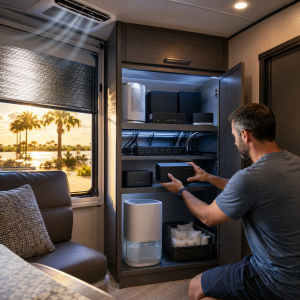
Heat gets most of the attention in a Rio Grande Valley summer, but humidity is doing its own quiet damage the whole time, and it’s specifically hard on electronics in a way that dry heat alone isn’t. August in the Valley combines both factors at their worst, and understanding how moisture actually damages RV electronics — and what genuinely protects against it — is worth knowing before a small issue becomes an expensive one.
Why Humidity Specifically Damages Electronics
Moisture in the air causes several distinct problems for electronic components. Condensation forms when warm, humid air meets cooler surfaces — inside an RV that’s been closed up with AC running, temperature differentials between the cooled interior air and any less-insulated components or surfaces can produce exactly this condensation, sometimes in places you wouldn’t expect. That moisture, even in small amounts, can corrode electrical contacts, connectors, and circuit boards over time, and corrosion is a progressive problem that gets more expensive to fix the longer it goes unaddressed.
Beyond direct corrosion, humidity also affects components more subtly — printed circuit boards can develop conductive pathways where none should exist if moisture infiltrates the board material, potentially causing intermittent electrical faults that are notoriously difficult to diagnose precisely because they only manifest under certain moisture conditions. High humidity combined with heat also accelerates the general aging process of many electronic components, shortening their functional lifespan even without an obvious failure event.
“The tricky thing about humidity damage is that it’s rarely dramatic. Nobody’s electronics usually just die outright from moisture — you get weird, intermittent problems first. A sensor that acts up occasionally, a connection that seems to work fine most of the time but not always. That gradual, inconsistent failure pattern is actually the signature of moisture-related electrical problems.”
Where Moisture Actually Gets In
Understanding entry points helps target your prevention efforts effectively. Roof vents, seams, and any compromised sealant are the most common pathways for moisture intrusion into an RV’s interior spaces and electrical systems — which ties directly to the importance of maintaining roof and seam sealant discussed in RV maintenance guides generally, since a roof leak isn’t just a water damage risk, it’s specifically an electronics risk too. Slide-out seals, window seals, and door seals are secondary entry points worth checking periodically, particularly before an extended humid-season stay.
Beyond direct water intrusion, ambient humidity simply infiltrating the RV’s interior air through normal ventilation and use is a factor even without any specific leak — this is where interior humidity management, rather than just leak prevention, becomes a meaningful additional layer of protection.
Practical Humidity Management Inside Your RV
Portable Dehumidifiers
A portable dehumidifier sized appropriately for your RV’s interior square footage is one of the most direct and effective tools for managing interior humidity, particularly during an extended South Texas summer stay. Running a dehumidifier consistently, rather than only when humidity feels noticeably high, maintains a more stable interior moisture level that protects electronics proactively rather than reactively. Emptying the water reservoir regularly (or using a model with a direct drain option) and monitoring the unit’s performance ensures it’s actually keeping pace with the Valley’s genuinely high ambient humidity.
Desiccant Products for Smaller Spaces
For cabinets, storage compartments, and smaller enclosed spaces where a portable dehumidifier isn’t practical, moisture-absorbing desiccant products (silica gel packs or specifically designed RV moisture absorbers) provide targeted protection for electronics and equipment stored in these areas. These products need periodic replacement or recharging once saturated, so checking and replacing them on a regular schedule during humid months is part of making them actually effective rather than a one-time setup you forget about.
Maintaining Consistent Interior Climate Control
Running your AC consistently, rather than letting the interior swing between cooled and un-cooled states, helps manage humidity as a side effect of temperature control, since AC systems inherently remove some moisture from the air as part of the cooling process. For guests managing both the heat and humidity side of a South Texas summer stay, the RV AC and electrical tips for summer heat guide covers the broader AC management picture that directly supports humidity control as well, since a well-functioning, appropriately sized AC system is doing double duty against both heat and moisture.
Protecting Specific Electronics and Equipment
Entertainment Systems and Electronics Storage
Televisions, sound systems, laptops, and other consumer electronics benefit from elevated storage rather than being placed directly on surfaces prone to condensation, and keeping them away from windows or areas with more temperature fluctuation reduces their exposure to condensation cycles. When electronics aren’t in active use for an extended period, particularly during any stretch when the RV itself is unoccupied, ensuring the interior climate control continues running (rather than shutting everything down and leaving the interior to match ambient outdoor humidity) protects stored electronics considerably better than leaving the RV fully closed up without any climate management.
Exterior Electrical Connections
Exterior electrical connections — your shore power connection, any exterior outlets, and connection points for equipment like solar panels — are directly exposed to ambient humidity and benefit from dielectric grease or similar moisture-protective products at connection points, following manufacturer guidance for your specific equipment. Periodically inspecting these exterior connections for any sign of corrosion, particularly during an extended humid-season stay, catches developing problems before they cause a functional failure.
Storage Considerations for Extended Stays or Off-Season Periods
If your RV will sit unused for any extended period during South Texas summer — whether during a stretch of travel elsewhere or seasonal storage — leaving desiccant products in enclosed compartments, maintaining some level of interior climate control if the RV remains connected to power, and doing a periodic check-in on the RV’s interior condition rather than leaving it completely unchecked for weeks are all reasonable precautions. An RV left fully closed up with zero climate management through a South Texas summer, particularly if any moisture has intruded even slightly, creates close to ideal conditions for the kind of gradual electronics damage this whole topic is about.
Why it matters: humidity in the 70s-80s% range combined with August heat corrodes connectors/circuit boards and can cause intermittent electrical faults — often gradual, not dramatic failure.
Entry points: roof vents/seams/sealant (most common), slide-out/window/door seals, plus general ambient humidity infiltration.
Interior management: appropriately sized portable dehumidifier run consistently; desiccant packs for cabinets/storage compartments, replaced/recharged regularly.
Climate control: running AC consistently helps manage humidity as well as heat — don’t let the interior swing between cooled and uncooled states.
Electronics storage: elevate off surfaces prone to condensation, away from windows/high-fluctuation areas.
Exterior connections: dielectric grease at connection points, periodic corrosion inspection.
Extended absence/storage: maintain some climate control if possible, use desiccants in compartments, check in periodically rather than leaving fully closed up for weeks.
For guests planning a summer or extended Valley stay who want to factor humidity protection into their overall RV maintenance approach, the about Mission RV Resort page gives the fuller picture of the resort and community. Current rates for any length stay are at the Mission RV Resort pricing page. And for booking a summer or extended Valley stay, Mission RV Resort is the starting point.
Frequently Asked Questions
How does humidity actually damage RV electronics?
Humidity causes condensation when warm, moist air meets cooler surfaces, and this moisture can corrode electrical contacts, connectors, and circuit boards over time. Beyond direct corrosion, moisture infiltrating circuit board material can create unintended conductive pathways, leading to intermittent electrical faults that are difficult to diagnose since they only appear under certain moisture conditions. High humidity combined with heat also accelerates the general aging of electronic components, shortening their functional lifespan even without a single obvious failure event. This damage pattern is often gradual and inconsistent rather than a dramatic, immediate failure.
Should I run a dehumidifier in my RV during South Texas summer?
Yes, a portable dehumidifier sized appropriately for your RV’s interior is one of the most direct tools for managing humidity during a South Texas summer stay, particularly given the region’s typically high humidity levels in the 70s and 80s percent range. Running the dehumidifier consistently, rather than only when humidity feels noticeably high, maintains more stable interior moisture levels that protect electronics proactively. Regularly emptying the water reservoir or using a model with a direct drain option ensures the unit keeps pace with the Valley’s genuinely high ambient humidity.
Where does moisture typically get into an RV?
Roof vents, seams, and any compromised roof sealant are the most common pathways for moisture intrusion into an RV’s interior and electrical systems, which is why maintaining roof and seam sealant is directly relevant to electronics protection, not just general water damage prevention. Slide-out seals, window seals, and door seals are secondary entry points worth checking periodically. Beyond direct leaks, ambient humidity can also infiltrate the RV’s interior air through normal ventilation and use, which is why interior humidity management matters even without an identifiable leak.
What should I do to protect my RV’s electronics if it will sit unused during summer?
Leaving desiccant products in enclosed cabinets and storage compartments, maintaining some level of interior climate control if the RV remains connected to power, and doing periodic check-ins on the RV’s interior condition rather than leaving it completely unchecked for weeks are reasonable precautions. An RV left fully closed up with no climate management through a South Texas summer, particularly if any moisture has intruded even slightly, creates close to ideal conditions for gradual electronics damage from humidity and heat combined.
Can dirty or corroded electrical connections cause RV problems?
Yes. Exterior electrical connections, including shore power connections and outlets, are directly exposed to ambient humidity and can develop corrosion over time if not periodically inspected and protected. Using dielectric grease or similar moisture-protective products at connection points, following manufacturer guidance for your specific equipment, and periodically checking exterior connections for signs of corrosion helps catch developing problems before they cause a functional failure, particularly during an extended humid-season stay in South Texas.
Does running my RV’s AC help with humidity as well as heat?
Yes. Air conditioning systems inherently remove some moisture from the air as part of the cooling process, so running your AC consistently rather than letting the interior swing between cooled and uncooled states helps manage humidity as a beneficial side effect of temperature control. This means a well-functioning, appropriately sized AC system is doing double duty during a South Texas summer stay — managing both the heat and, to a meaningful degree, the interior humidity level that affects electronics.